The Problem & The Solution
Binary floating point (Float/Double) has been the primary floating-point number format on general-purpose computers since the adoption of IEEE 754 in 1985. For mathematical reasons rooted in base 2, most decimal fractions (like 0.10) cannot be represented exactly. In addition, correctly rounding a decimal value to a given number of decimal places cannot be done in binary — rounding 1.015 to the nearest cent should give 1.02 under banker’s rounding, but binary floating-point arithmetic yields 1.01.
For domains such as finance, accounting, taxation, and payments, these discrepancies are unacceptable. Legal, contractual, and audit requirements demand arithmetic that produces exactly the same results as manual decimal calculations.
Currently the only fast hardware option for decimal is found on IBM Z (mainframe) and POWER processors. Slower software implementations are required for all other general purpose computers. Intel libbid is an implementation in C, available to C and C++ developers via gcc compiler extensions. Java BigDecimal is widely used, but is not IEEE 754 compliant. Python has excellent Decimal support that predates IEEE 754 decimal floating point, but Python is relatively slow and Python is not frequently used in commercial financial applications.
Miguel developed an IEEE 754-2019 compliant decimal128 high-performance software architecture, implemented in nine programming languages — C, Java, Kotlin KMP, C#, Swift, Rust, Go, Zig, and Python.
This implementation guarantees identical, auditable, spec-compliant decimal arithmetic on every platform:
- Ensures exactness for decimals up to 34 digits of precision
- Provides five rounding directions
- Outperforms the IBM (libdecnumber) and Intel (libbid) reference libraries, and Python’s libmpdec
- Passes all three major industry correctness suites: IBM decTest, IBM fptest, and Intel libbid test vectors
- Removes the “no good decimal option” barrier for the finance industry
This solution makes it possible to move decimal financial workloads off the IBM mainframe to the cloud without sacrificing the numerical correctness, determinism, or auditability that regulated environments depend on.
The decimal128 architecture is implemented natively in nine programming languages, so systems built on different platforms can share exactly the same arithmetic behaviour:
C · Java · Kotlin KMP · C# · Swift · Rust · Go · Zig · Python
The Swift and Kotlin implementations run natively on iOS and Android — reaching mobile fintech, payments, and point-of-sale applications, which previously have only had limited, slow, non-standardized decimal options.
The Problem in Practice
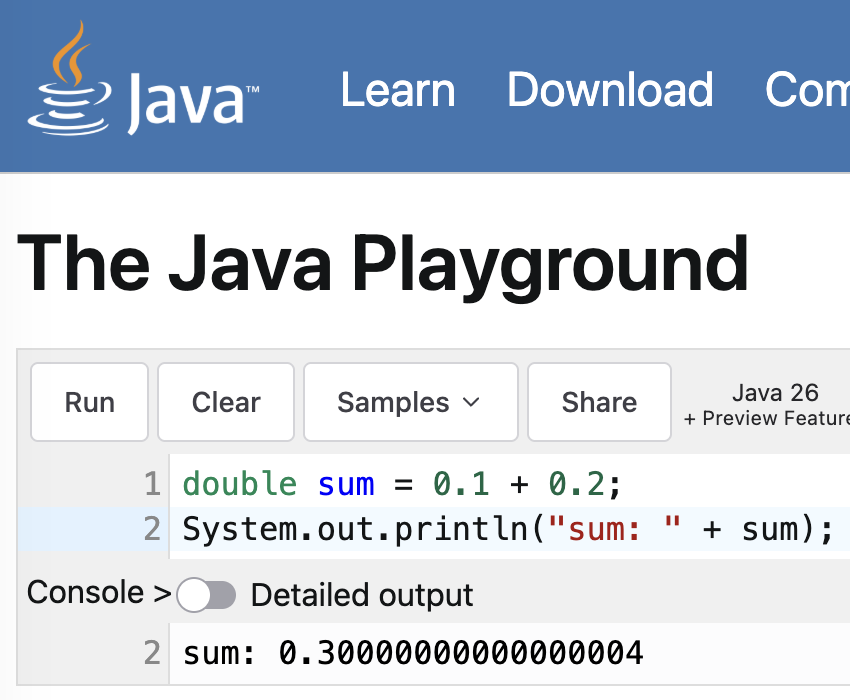
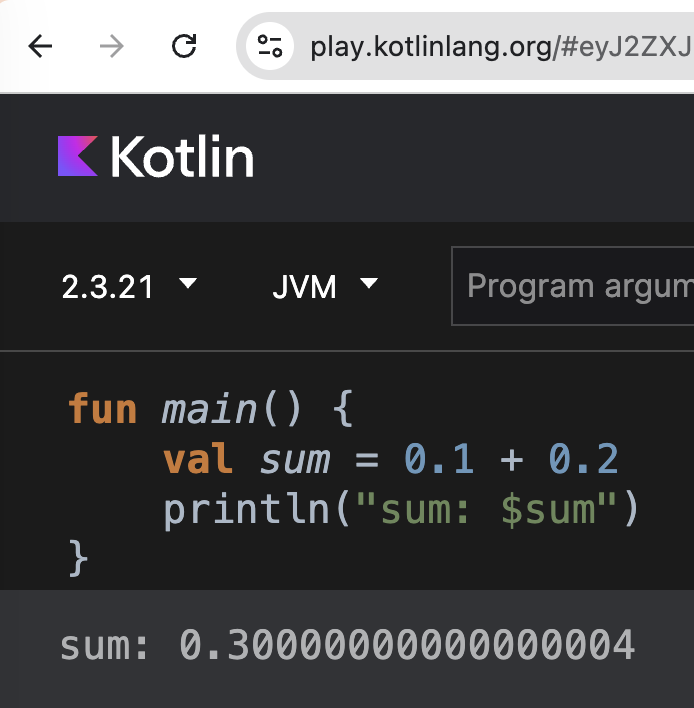
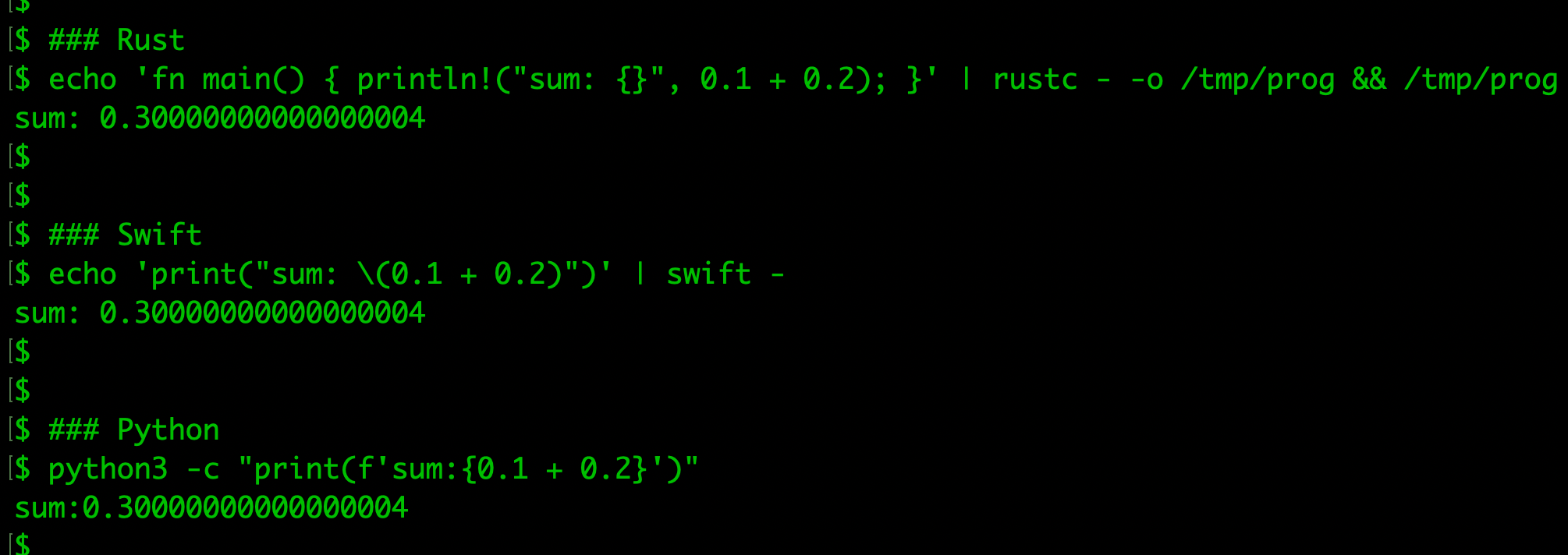
The calculation 0.1 + 0.2 in Binary Floating point results in 0.30000000000000004 instead of 0.3.
Who is Miguel?
Miguel is a retired entrepreneur, engineer, and expert in database technology with a broad computer systems background.
Early in his career Miguel co-authored the Microsoft Applesoft Compiler for the Apple ][ computer. Miguel was then the first non-founder employee of Datext, where he architected a specialized time-series database for CD-ROM for the financial services industry, later acquired by Lotus Development Corporation. Continuing his work with CD-ROM databases, Miguel joined Ziff Communications as VP Technology for the Computer Library Division. He then founded InterActive WorkPlace, a sales force information system that was acquired by Siebel Systems. Miguel later worked with Scalent Systems as Senior Member, Technical Staff. Scalent was later acquired by Dell to become the cornerstone of their data center automation suite.
In more recent years, Miguel focused his time on data warehousing, applying Big Data technologies to solve traditional business data processing problems for several major US financial institutions. Miguel co-founded Podium Data, which was later acquired by Qlik. Miguel has now been working on his decimal128 software solution, hoping to revolutionize the financial world.
Before all this, Miguel worked as a research intern at Xerox PARC while obtaining BS and MS degrees in Computer Science from MIT.